
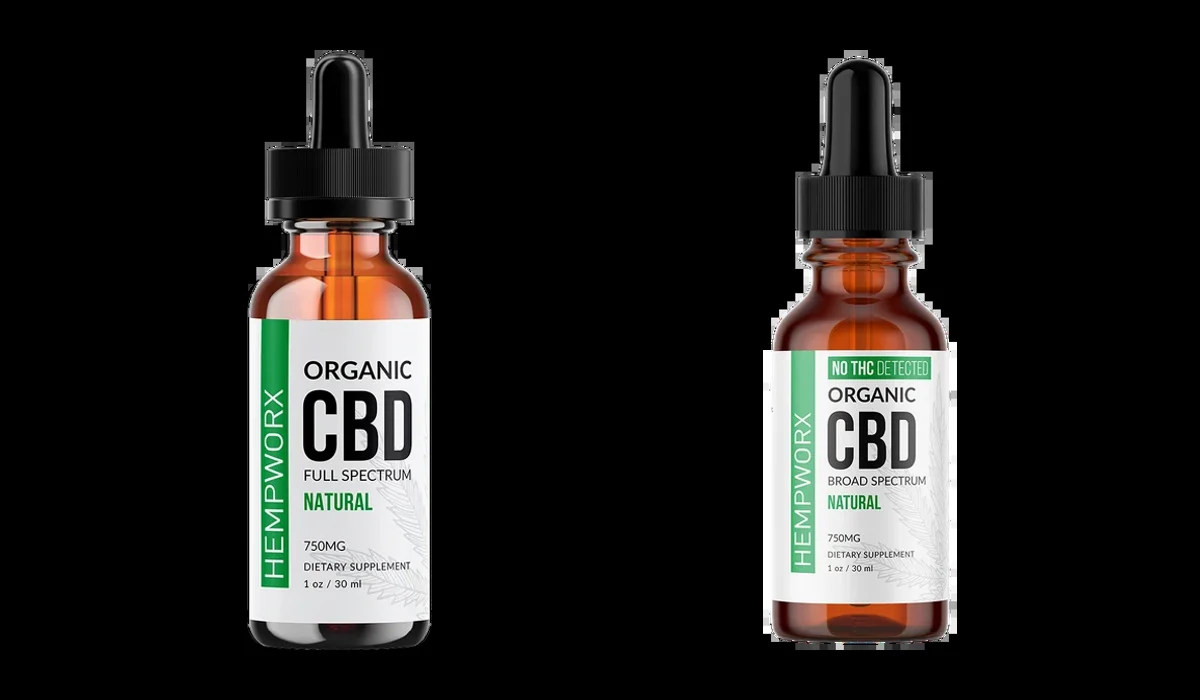
Quick answer: Full spectrum CBD contains everything the hemp plant naturally produces, including CBD, minor cannabinoids, terpenes and a trace of THC. Broad spectrum CBD keeps the CBD, minor cannabinoids and terpenes but has the THC removed, usually to non-detectable levels. CBD isolate is pure CBD with nothing else. The right choice depends mainly on whether you need to avoid THC, and on federal rules that are changing for full spectrum products in late 2026.
Key takeaways
- Full spectrum contains trace THC, historically up to 0.3% by dry weight under federal hemp rules.
- Broad spectrum removes the THC while keeping other cannabinoids and terpenes.
- If you are drug tested at work or simply want zero THC, broad spectrum or isolate is the safer choice.
- A new federal limit of 0.4 mg total THC per container is scheduled to take effect on December 11, 2026, which affects most full spectrum products.
What does "spectrum" mean in CBD?
The hemp plant produces more than a hundred cannabinoids, along with aromatic compounds called terpenes and other plant compounds such as flavonoids. CBD (cannabidiol) is usually the most abundant. "Spectrum" describes how much of the rest of the plant's natural profile stays in the finished oil after extraction.
There are three main types:
- Full spectrum: the whole profile, including a trace of THC.
- Broad spectrum: the whole profile minus the THC.
- Isolate: CBD alone, typically 99% pure, with no other cannabinoids or terpenes.
What is full spectrum CBD?
Full spectrum CBD is made by extracting the hemp plant's compounds together and leaving them in their natural proportions. Alongside CBD, a full spectrum oil typically contains minor cannabinoids such as CBG, CBC and CBN, terpenes like myrcene and limonene, and a trace of THC.
Under the 2018 Farm Bill, legal hemp was defined as cannabis containing no more than 0.3% delta-9 THC by dry weight. That is a small amount, and it is far below what is needed to feel "high" for most people at typical servings. It is still THC, however, and it matters for two reasons covered below: drug testing and the new federal limit.
HempWorx Full Spectrum CBD Oil (Natural) is an example. It is made from USDA-certified organic hemp grown in the United States, CO2-extracted to keep the plant's cannabinoids and terpenes together, and carried in organic hemp seed oil. It also comes in cinnamon and peppermint full spectrum flavors.
What is broad spectrum CBD?
Broad spectrum CBD starts as a full spectrum extract. An additional refining step then removes the THC, ideally to a level that laboratory testing cannot detect. The CBD, other cannabinoids and terpenes remain.
Broad spectrum is popular with people who want a plant-based profile without THC: professionals who are drug tested, athletes in tested sports, or anyone who simply prefers to avoid it. HempWorx THC-Free CBD Oil (Natural), a broad spectrum tincture with no detectable THC, is built for exactly that, in a 30 ml bottle with an organic hemp seed oil base. The same formula comes in cinnamon and peppermint, and the range also includes broad spectrum CBD gummies for anyone who prefers a pre-measured format.
What is the "entourage effect"?
You will often see full and broad spectrum products described in terms of the "entourage effect." The idea, first proposed by cannabis researchers in the late 1990s, is that the plant's compounds may work differently together than CBD does alone. It is a widely discussed theory, but human research testing it directly is still limited. It is reasonable to choose a broad or full spectrum product because you prefer a whole-plant profile. It is not accurate to say science has proven one type works better than another.
Full spectrum vs broad spectrum: side-by-side
| Full spectrum | Broad spectrum | Isolate | |
|---|---|---|---|
| CBD | Yes | Yes | Yes |
| Other cannabinoids | Yes | Yes | No |
| Terpenes | Yes | Yes | No |
| THC | Trace amounts | Removed, typically non-detectable | None |
| Drug test risk | Real, especially with daily use | Low, but not zero | Lowest |
| Taste | Earthy, plant-like | Earthy, slightly milder | Neutral |
Will full spectrum CBD show up on a drug test?
It can. Most workplace drug tests look for a THC breakdown product, not CBD. Taken daily, even trace THC can build up. In a 2020 study published in JAMA Psychiatry, half of the participants using a full spectrum CBD product with 0.02% THC tested positive for the THC metabolite after four weeks. For a full explanation, read Will CBD Show Up on a Drug Test?
Important: federal rules are changing for full spectrum CBD
As of October 2026, the legal landscape is shifting. In November 2025, Congress passed a law redefining hemp. Under the new definition, finished hemp products may contain no more than 0.4 mg of total THC per container. Most full spectrum oils contain more than that across a whole bottle, so the change affects them directly.
The rule was originally set to take effect on November 12, 2026. A federal funding law signed in September 2026 moved that date to December 11, 2026, and Congress is still debating further changes. Broad spectrum products with non-detectable THC are generally expected to fall within the new limit. Because this is moving quickly, check the official product page and current federal guidance for the latest status, and know that state laws also vary.
Which should you choose?
- You are drug tested, compete in a tested sport or want zero THC: choose broad spectrum, such as the THC-Free CBD Oil.
- You want a whole-plant profile and THC is not a concern: full spectrum may appeal, but keep the federal timeline above in mind.
- You want CBD alone with no flavor of the plant: isolate is the simplest.
- You are curious about the raw form of CBD: read What Is CBDA?
Whichever type you choose, look for third-party lab results (a certificate of analysis) that confirm the cannabinoid content and screen for contaminants. Then decide on a strength, which our guide on how to choose a CBD oil strength walks through step by step.
Frequently asked questions
What is the main difference between full spectrum and broad spectrum CBD?
Full spectrum CBD contains trace THC along with CBD, minor cannabinoids and terpenes. Broad spectrum CBD keeps the CBD, minor cannabinoids and terpenes but has the THC removed, typically to non-detectable levels.
Does full spectrum CBD get you high?
Full spectrum CBD contains only trace THC, historically up to 0.3% by dry weight, which is far below the amount needed to feel high for most people at typical servings. It can still show up on a drug test.
Is broad spectrum CBD completely THC-free?
Broad spectrum products are processed to remove THC, typically to levels laboratory testing cannot detect. Check the certificate of analysis for your batch to confirm.
What is CBD isolate?
CBD isolate is purified CBD, typically 99% pure, without other cannabinoids, terpenes or THC.
Is full spectrum CBD still legal?
A federal law passed in November 2025 limits finished hemp products to 0.4 mg of total THC per container, with enforcement now scheduled for December 11, 2026. This affects most full spectrum products, and state laws also vary, so check current guidance.
References
- Agriculture Improvement Act of 2018 (2018 Farm Bill), definition of hemp, 7 U.S.C. 1639o.
- Dahlgren MK, et al. Urinary tetrahydrocannabinol after 4 weeks of a full-spectrum, high-cannabidiol treatment. JAMA Psychiatry. 2020. Full text
- Foley Hoag. A temporary reprieve for hemp-THC products. September 2026.
These statements have not been evaluated by the Food and Drug Administration. HempWorx products are not intended to diagnose, treat, cure, or prevent any disease. This article is for general education and is not medical or legal advice. Hemp laws vary by state and are changing at the federal level. Talk with your healthcare provider before using CBD, especially if you are pregnant, nursing, take medication or have a medical condition.