
Quick answer: Standard drug tests look for THC, not CBD, so pure CBD by itself should not cause a positive result. The risk comes from THC in the product. Full spectrum CBD contains trace THC that can build up with daily use and trigger a positive test. Broad spectrum and isolate products carry a much lower risk, but because labels are not always accurate, no CBD product can guarantee a negative result. If your job depends on a clean test, choose a THC-free product with a batch-specific lab report.
Key takeaways
- Workplace drug tests detect a THC metabolite called THC-COOH, not CBD.
- In one study, half of people using a full spectrum CBD product daily tested positive after four weeks.
- Broad spectrum (THC-free) products greatly reduce the risk but cannot eliminate it completely.
- A certificate of analysis with non-detectable THC for your exact batch is your best protection.
What do drug tests actually look for?
Most workplace drug screens are urine tests. For cannabis, they look for THC-COOH, a breakdown product your body makes after THC is processed. A typical screening test flags a sample at 50 nanograms per milliliter, and a positive screen is usually confirmed by a more precise lab test at a lower threshold of 15 ng/mL, following federal workplace testing guidelines.
These tests are not designed to look for CBD. So the real question is not "does CBD show up?" but "does my CBD product contain enough THC to show up?"
Can full spectrum CBD make you fail a drug test?
Yes, it can. Full spectrum CBD keeps the hemp plant's natural profile, including a trace of THC. One serving contains very little, but THC is stored in body fat and builds up with regular use.
A 2020 study published in JAMA Psychiatry tested this directly. Participants took a full spectrum, high-CBD product containing just 0.02% THC every day. After four weeks, 7 of the 14 participants, half the group, tested positive for the THC metabolite. Diagnostic companies such as Quest Diagnostics have issued similar warnings to clinicians.
Several things make a positive result more likely with full spectrum products:
- Daily use over weeks rather than occasional use
- Larger servings or higher-strength products
- Body composition and metabolism, which vary from person to person
- Timing, especially use in the days right before a test
What about broad spectrum and THC-free CBD?
Broad spectrum CBD has the THC removed during processing, ideally to a level laboratory testing cannot detect. Isolate is pure CBD. Both carry far less risk than full spectrum products, which is why people who are drug tested usually choose them.
The catch is quality control across the industry. In a 2017 study in JAMA, researchers tested 84 CBD products bought online and found THC in about one in five of them, including some that were not supposed to contain it. That is why choosing a reputable brand with batch testing matters as much as the word "THC-free" on the label.
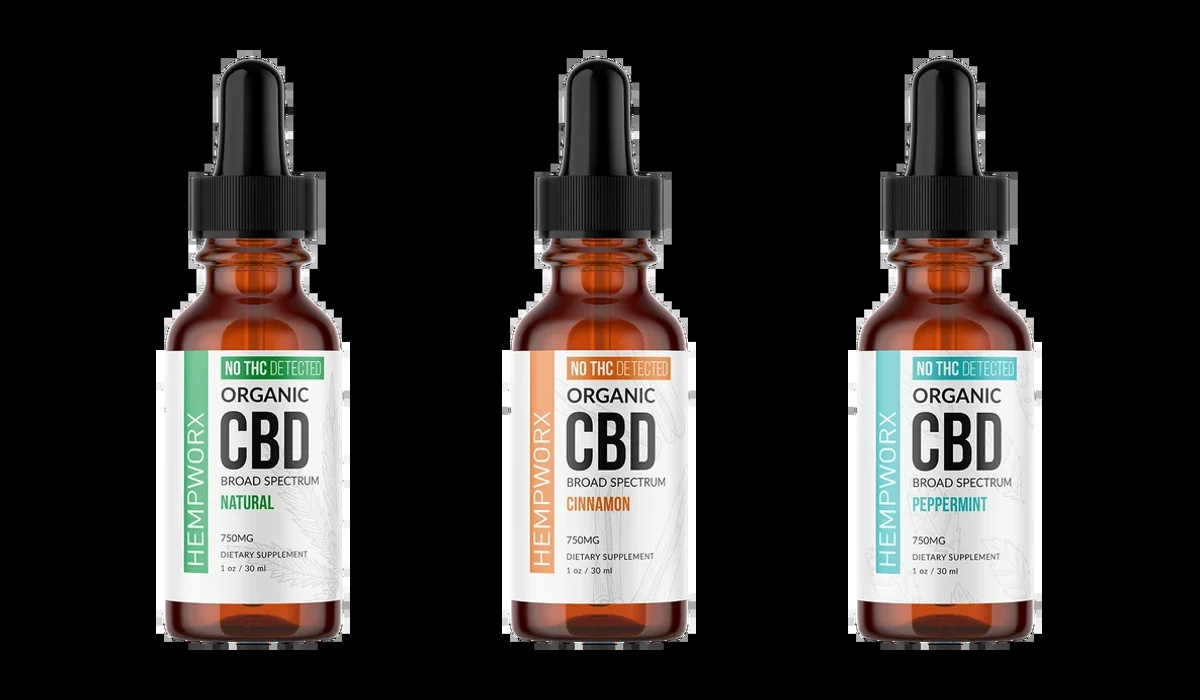
The HempWorx THC-Free CBD Oil, a broad spectrum tincture with no detectable THC, is designed for people in this situation, and it comes in peppermint and cinnamon as well as natural. For a pre-measured option, the HempWorx broad spectrum CBD gummies are also made with THC removed.
Full spectrum vs broad spectrum: drug test risk at a glance
| Product type | THC content | Drug test risk |
|---|---|---|
| Full spectrum | Trace THC | Real, especially with daily use |
| Broad spectrum (THC-free) | Removed, typically non-detectable | Low, but not zero |
| Isolate | None intended | Lowest, but depends on product quality |
For a deeper comparison of the three types, read Full Spectrum vs Broad Spectrum CBD.
How to lower your risk if you are drug tested
- Choose broad spectrum or isolate, never full spectrum.
- Check the certificate of analysis for your batch number, and confirm THC is listed as non-detectable (often shown as "ND").
- Buy from established brands that test every batch with an independent lab.
- Avoid products that do not list THC content or that rely on vague claims.
- Keep your serving consistent and moderate, since larger amounts mean more exposure to any trace THC.
- Talk with your employer or testing program before you start, if the stakes are high.
Special cases: athletes, the military and safety-sensitive jobs
Athletes: the World Anti-Doping Agency removed CBD from its prohibited list in 2018, but THC and other cannabinoids remain prohibited in competition. A product with trace THC or other cannabinoids can still cause a violation, so athletes should be especially careful about product choice and testing.
Military: the U.S. Department of Defense prohibits service members from using hemp-derived products, including CBD, regardless of THC content.
Federally regulated jobs: the U.S. Department of Transportation has warned safety-sensitive employees, such as pilots, drivers and train operators, that using CBD products is not an acceptable explanation for a positive THC test.
If you fall into one of these groups, the safest choice may be not to use CBD at all. Check your organization's policy before you decide.
A note on changing federal rules
As of October 2026, a federal law passed in November 2025 limits finished hemp products to 0.4 mg of total THC per container, with enforcement now scheduled for December 11, 2026. That change mainly affects full spectrum products, and it may shift what is available on the market. It does not change how drug tests work, so the advice above still applies. Check the official product pages for current details.
The bottom line
CBD itself is not what drug tests look for, but THC in a product can be. If testing is part of your life, choose a broad spectrum or isolate product from a brand that publishes batch-specific lab results, keep servings moderate, and know your employer's or sport's policy. If you are new to CBD, our guides on choosing a CBD oil strength and what CBDA is will help you choose with confidence. Talk with your healthcare provider before using CBD, especially if you take medication.
Frequently asked questions
Does CBD show up on a drug test?
Standard drug tests look for a THC metabolite, not CBD. A positive result usually comes from THC in the product, which is why full spectrum CBD carries more risk than broad spectrum or isolate.
Can you fail a drug test from full spectrum CBD?
Yes. In a 2020 study, half of participants using a full spectrum CBD product with 0.02% THC every day tested positive for the THC metabolite after four weeks.
Is THC-free CBD safe for drug tests?
Broad spectrum or THC-free CBD greatly lowers the risk, but no product can guarantee a negative result. Choose a brand with batch-specific lab results showing non-detectable THC.
How long does THC from CBD oil stay in your system?
It varies with how often you use it, how much you take and your metabolism. Regular daily use allows trace THC to build up over time.
Can athletes use CBD?
The World Anti-Doping Agency permits CBD but prohibits THC and other cannabinoids in competition, so athletes should be very careful about product choice and testing.
References
- Dahlgren MK, et al. Urinary tetrahydrocannabinol after 4 weeks of a full-spectrum, high-cannabidiol treatment in an open-label clinical trial. JAMA Psychiatry. 2020. Full text
- Bonn-Miller MO, et al. Labeling accuracy of cannabidiol extracts sold online. JAMA. 2017;318(17):1708-1709.
- Quest Diagnostics. Full-spectrum CBD may trigger positive THC result.
- Foley Hoag. A temporary reprieve for hemp-THC products. September 2026.
These statements have not been evaluated by the Food and Drug Administration. HempWorx products are not intended to diagnose, treat, cure, or prevent any disease. This article is for general education and is not medical or legal advice. Hemp laws vary by state and are changing at the federal level. Talk with your healthcare provider before using CBD, especially if you are pregnant, nursing, take medication or have a medical condition.